Leveraging nanoscale engineering to enhance fertilizer performance

OUR SOLUTION

A new class of fertilizer

We’re developing nanoparticle-based fertilizers (“nanofertilizers”) that supply nutrients in a highly efficient, crop-available form, improving uptake, mobility, and overall yield.

They’re engineered for performance and practicality. We can’t make fertilizer cheaper, but we can make every dollar spent on it go further.
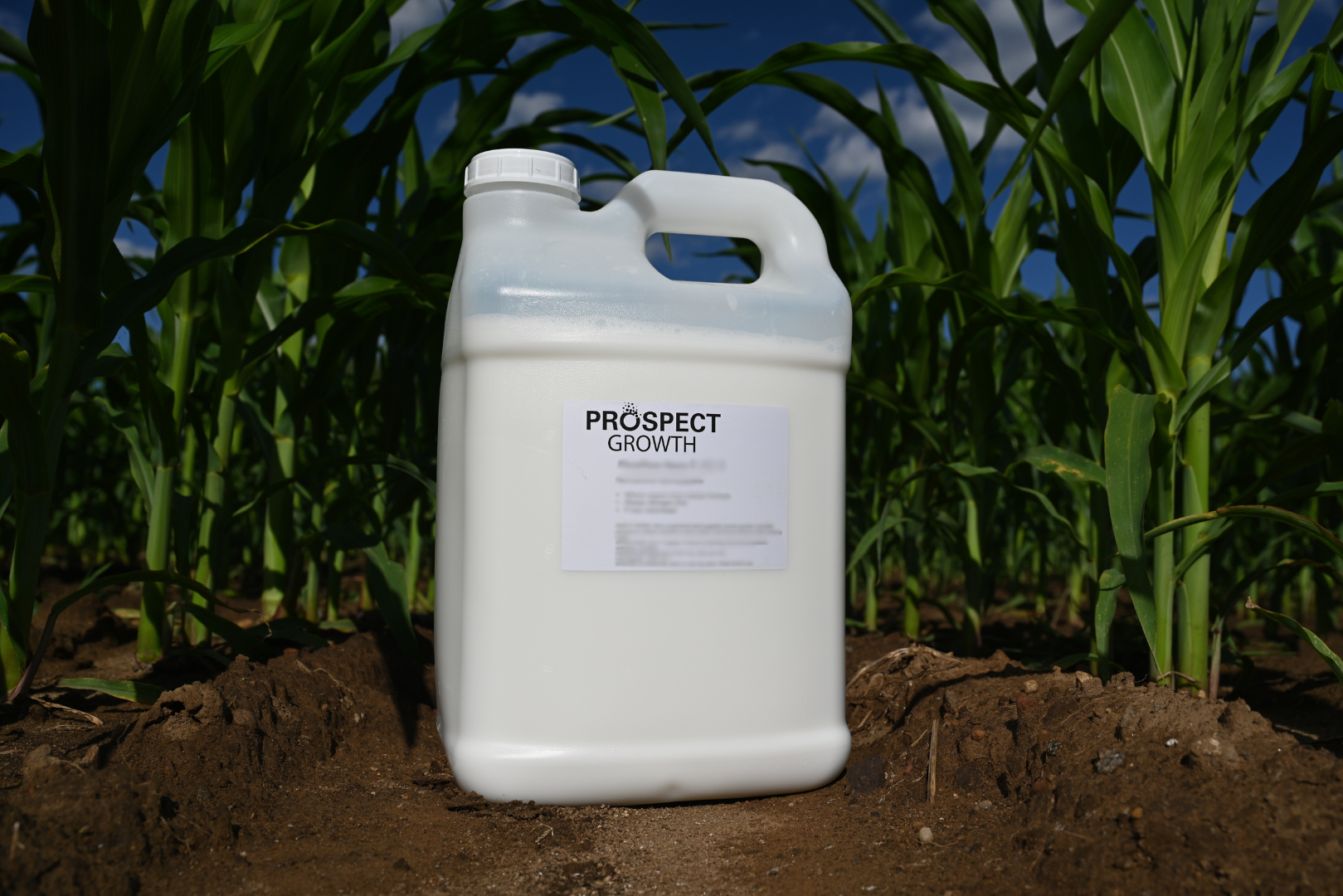
Jug of nanofertilizer solution in corn field

SPONSORS

Logo for Massachusetts Clean Energy Center featuring a stylized letter C with wave and wind symbols.
Logo featuring interconnected gray and gold circles forming a star-like shape with the text 'Breakthrough Energy' beside it.
NSF logo featuring a globe surrounded by a gear next to the NSF Corps logo with a grid pattern and text reading 'NSF CORPS' and 'NSF Innovation Corps'.
Yale Center for Business and the Environment logo with a bar graph icon
Logo of the New Jersey Soybean Board, Inc. with the outline of New Jersey and soybean pods in the center.
VentureWell logo with the tagline 'idea to impact'
Logo of the United States Environmental Protection Agency (EPA) with a stylized symbol of a person and a plant.
NY Soybean Council logo with a checkmark and a rising sun graphic.
The word 'Activate' written in bold, gray letters against a white background.

ECOSYSTEM PARTNERS

Logo for The Fertilizer Institute with stylized leaf or plant graphic and bold text.
Logo for Grand Farm with a hexagon graphic featuring stylized fields, and the words "Grand Farm" to the right.
Text displaying 'Berkeley Haas' with 'Berkeley' in light gray and 'Haas' in bold black.
UMass Amherst logo with university seal and text.
Center for Green Chemistry and Green Engineering at Yale logo with a laboratory flask and a globe
Logo of North Dakota State University with the acronym NDSU in large font
Black spherical nanofertilizer particles

HOW IT WORKS

Precision nutrient delivery

Nanofertilizers are suspensions of solid nutrient particles engineered at the nanometer scale, offering precise control over composition and release.

Unlike traditional fertilizers, they deliver more consistent nutrient release, reduce the risk of tissue burn, and improve mobility in both soils and plant tissues.

WHY IT MATTERS

Reducing nutrient loss in the field

Synthetic fertilizers will continue to play a vital role in agriculture, but their formulations need to evolve. Too often, nutrients are lost before crops can use them—not from poor management, but from the limits of existing formulations. Farmers and their soils deserve more efficient solutions.


98%

of global agriculture relies on synthetic fertilizers to maintain soil fertility and keep farms productive and profitable

(sources: USDA, Nature)​

50-90%

of applied fertilizer never get utilized by the crop, reducing farm profitability and allowing valuable nutrients to escape the field

(sources: Nature, Our World In Data, FiBL/IFOAM)

50%

of the world’s population relies on food that could not otherwise be produced without synthetic fertilizers

(sources: Nature, Our World In Data, FiBL/IFOAM)